03
Jun 28, 2019
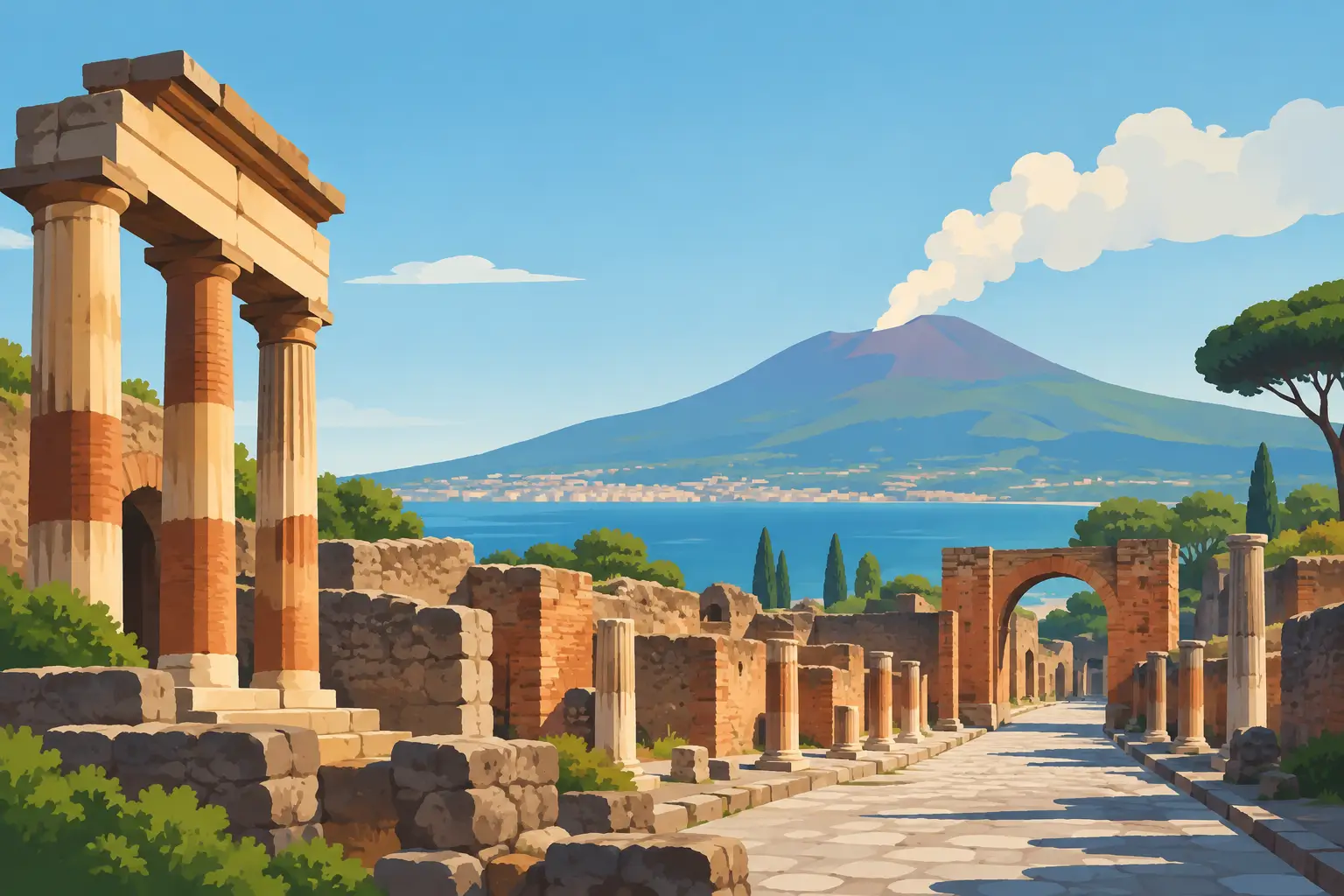
A Pompeii Herculaneum Vesuvius private tour is one of the most rewarding full-day trips from Naples, but it only works well when the day is paced realistically. These are three very different stops: a vast Roman city, a compact waterfront town preserved beneath volcanic material, and an active volcano with weather-dependent access. Private transportation gives you the time and flexibility to experience each one without managing train changes, station walks, parking, or a rental car on unfamiliar roads.
For travelers staying in Naples, Sorrento, or the Amalfi Coast, the main advantage is simple: your driver collects you at your hotel, cruise port, airport, or agreed address, keeps your luggage secure if needed, and follows an itinerary built around your priorities. The vehicle price is agreed in advance, with fuel, tolls, and parking considered in the arrangement. No meter, no surprises.
The three sites tell one story from different angles. In 79 AD, Mount Vesuvius buried Pompeii and Herculaneum in the same eruption, yet each place feels entirely distinct today.
Pompeii is the larger and more famous archaeological site. Its streets, public baths, forum, villas, bakeries, and theaters give visitors a strong sense of daily Roman life. It is also extensive. Even a focused visit can involve significant walking over uneven ancient stone roads, so trying to see every corner in one stop is rarely the best plan.
Herculaneum is smaller, easier to navigate, and often feels more intimate. The town was covered by a different volcanic flow, which helped preserve upper floors, wooden features, doors, furniture, and vivid wall paintings. Travelers who worry that two archaeological sites may feel repetitive are usually surprised by how different Herculaneum is from Pompeii.
Vesuvius adds the geographic perspective. From the upper access area, visitors can walk toward the crater and look across the Bay of Naples on clear days. The experience is less about ancient ruins and more about understanding the force behind them.
A full-day private tour generally begins in the morning, especially in warmer months and on cruise days with fixed return times. The most comfortable order depends on your pickup point, opening hours, weather, and whether you have arranged a licensed archaeological guide.
For many guests departing Naples, a practical route is Pompeii first, followed by Herculaneum, then Vesuvius if conditions allow. Starting early at Pompeii offers cooler temperatures and more time before the site becomes busy. Herculaneum can then be visited at a more relaxed pace, while the volcano works well later in the day if your access time is confirmed.
That said, there is no single correct order. If Vesuvius has an early entry reservation, weather may make it the first priority. If you are arriving from Sorrento, Pompeii may be the logical first stop. A cruise guest with limited hours ashore may choose Pompeii and Vesuvius only, or Pompeii and Herculaneum, rather than rushing through all three.
Allow roughly two to three hours for Pompeii, about one to one and a half hours for Herculaneum, and approximately one and a half to two hours for Vesuvius, including the drive up and walking time. Add travel time between sites, a short lunch break, and time for restrooms and ticket procedures. Three stops are possible in a full day, but this is a sightseeing day, not a leisurely stroll.
A private driver and a licensed site guide provide different services. Your English-speaking driver manages the road logistics, pickup, timing, luggage, and route. They can share useful local context and help the day run smoothly, but they do not replace an authorized archaeological guide inside the ruins.
For guests who want detailed interpretation of Pompeii’s homes, frescoes, casts, and public buildings, reserving a licensed guide is worthwhile. A private guide can make a two-hour Pompeii visit far more focused, particularly for first-time visitors, families, and history enthusiasts. Others prefer to explore independently with an audio guide or site map and use the private car service to keep the day flexible.
Vesuvius is not a drive-up viewpoint. Private vehicles travel toward the designated access area, and visitors continue on foot along a sloped, loose-surface path toward the crater. The walk is manageable for many people, but it requires reasonable mobility, supportive shoes, and an honest assessment of your group’s comfort level.
Conditions can change quickly. Wind, rain, low visibility, heat, or site restrictions may affect access. In summer, bring water, sunscreen, and a hat. In cooler months, bring a light layer, because the summit can feel noticeably cooler than Naples or Pompeii. Crater access also commonly requires advance booking for a specific time window, so it should be planned before the day of travel.
If Vesuvius is closed or visibility is poor, a flexible private itinerary can be adjusted. You may spend more time at Pompeii or Herculaneum, add a scenic stop overlooking the Bay of Naples, or enjoy a longer lunch. This is one reason a private arrangement is especially useful: the day can respond to real conditions rather than follow a fixed coach schedule.
Wear comfortable closed-toe shoes with good grip. Pompeii’s original streets are uneven, Herculaneum has stairs and slopes, and Vesuvius involves a gravel path. Sandals may be fine for a short city walk, but they are not the best choice for this itinerary.
Bring identification, your site tickets or reservations, water, sun protection, and a small day bag. Large luggage is inconvenient inside the archaeological sites, but it can remain safely in the vehicle during your visits. This is particularly helpful for guests traveling from Naples to Sorrento, Positano, or the Amalfi Coast after the tour.
Tickets, meals, licensed guides, and volcano access are normally separate from the transportation service unless your confirmed itinerary states otherwise. Checking these details in advance avoids misunderstandings and protects your schedule. For a private tour, clarity matters: know what is included, where your driver will meet you, how long the vehicle is at your disposal, and what happens if a site changes access hours.
This itinerary is an excellent fit for couples, families, and small groups who want to make the most of one full day without relying on public transportation. It is also a practical shore excursion option for cruise passengers when planned around the ship’s all-aboard time.
It may be less suitable for travelers who prefer slow museum-style visits, have limited mobility, or want a long lunch with no schedule pressure. In that case, choose two sites rather than three. Pompeii and Herculaneum are the best pairing for archaeology lovers; Pompeii and Vesuvius suit visitors who want ruins plus the volcano; Herculaneum and Vesuvius offer a shorter, less walking-intensive alternative to a full Pompeii day.
Vehicle selection should match both passengers and luggage. A Mercedes sedan is comfortable for a couple with light luggage, while a V-Class van gives families and small groups more room. Larger parties can be arranged with Sprinter vehicles or multiple vehicles. Naples Limo Car Service can coordinate these details with a fixed price agreed before travel, so guests know what to expect before confirming.
Book as early as possible for spring, summer, holidays, and major cruise dates. The transportation can be arranged around your preferred pickup, but timed entries for Vesuvius and availability for licensed guides can be the limiting factors. Early planning is especially useful when you want a specific morning start or need to end the day at a different destination.
When requesting a quote, provide your travel date, pickup location, number of passengers, luggage count, preferred sites, and final drop-off point. If you are arriving by plane, train, or ship, share the arrival details so your driver can plan around the scheduled time and monitor delays where applicable.
A good Pompeii, Herculaneum, and Vesuvius day should leave you with memorable views and a clear sense of place, not the feeling that you spent your vacation chasing connections. Give each stop the time it deserves, keep the route flexible, and let the road logistics stay in experienced local hands.
Your privacy
We use technical cookies to make this website work. With your consent, we also use Google Analytics cookies to understand how visitors use the site, so we can improve it. You can change your choice at any time from “Cookie settings” at the bottom of the page. Privacy Policy